Search results: 95
By the end of this course, students should be able to:
-
Understand key legal frameworks
- Explain laws related to software such as intellectual property, copyright, patents, data protection, and cybercrime.
-
Apply ethical principles in IT practice
- Identify ethical dilemmas in software development and apply professional codes of ethics (e.g., ACM/IEEE) to resolve them.
-
Analyze data privacy and security issues
- Evaluate how software systems collect, store, and use data, and ensure compliance with privacy regulations.
-
Recognize intellectual property rights
- Differentiate between open-source, proprietary, and licensed software, and respect ownership rights.
-
Assess professional responsibility
- Understand accountability, liability, and the social impact of software systems on users and society.
-
Evaluate cybersecurity and cybercrime laws
- Identify legal implications of hacking, unauthorized access, and software misuse.
-
Promote ethical software development practices
- Integrate fairness, transparency, and inclusivity into system design (e.g., avoiding bias in algorithms).
-
Handle real-world case studies
- Critically analyze famous legal/ethical cases in IT and propose appropriate solutions.
-
Ensure compliance in software projects
- Apply legal and ethical standards during the software development lifecycle.
- Communicate ethical decisions effectively
- Justify decisions clearly to stakeholders, balancing technical, legal, and ethical considerations.
- Lecturer: Felix HARERIMANA
- Lecturer: NZAYISENGA Marcelin
The module aims at:
-Making students aware of the Management control environments
-Making students aware of Historical evolution of Management control theory and practices
-Making students understanding Management control as processes: Planning, organizing, coordinating and controlling
-Making students understanding the various principles of each step or Management control as processes
-understanding the principles of Management control
-Making students understanding the different roles of framework.
-Making students understanding decision making and leadership skills
Having successfully completed the module, students should be able to:
· apply principles of Management control in manufacturing or service industries
· apply Principles of Management control in any working environment
· apply Management control principles in any working environment
- Lecturer: NSABIMANA William
- Lecturer: Ddumba Yasser
Brief description of aims and content
The module aims at:
Making students aware of the Marketing, Production and Operations Management environment
Making students aware of Historical evolution of Marketing, Production and Operations Management theory and practice
Making students understanding management as a process: Marketing, Production and Operations Management
Making students understanding the various principles of each step of Marketing, Production and Operations Management as a process
Making students understanding the different roles of framework.
Making students understanding decision making and leadership skills
- Lecturer: Dr. Bruce Gashema,Ph.D
- Lecturer: NSABIMANA William
1) To be able to translate the expressions and juridical tems in Kinyarwanda and English or vice versa;
2) To be able to understand the custom Rwandan law;
3) To be able to distinguish the different parties of the judgment;
4) To be able to translate and comment a judgment in Kinyarwanda.
- Lecturer: Uwera Mamy
Brief description of aims and content
This module lays the foundations to the study of Finance and introduces the fundamental concepts of money and banking. It focuses particularly on introduction to theoretical and applied issues relating to the banking industry. It introduces to banking, central banking and banking regulations issues in bank management and comparative banking markets.
Learning Outcomes
At
the end of this course, students have a clear understanding about
- Monetary policy
- Central Banking
- Banking Regulations
- Issues in Bank Management
- Techniques and Practices of Banks
- Comparative Banking Markets.
- Lecturer: NSABIMANA William
The module aims to provide students with a comprehensive understanding of computer networking principles, network addressing, network operating systems, IP routing, and dynamic routing protocols, preparing them for practical applications in designing, implementing, and managing computer networks.
- Lecturer: Felicien Rimenyande
The judicial system of Rwanda is a fundamental pillar of the rule of law, tasked with ensuring justice, protecting rights, and resolving disputes. The organization, functioning, and competence of courts in Rwanda are governed by the Constitution and relevant organic laws. The court system is structured into ordinary and specialized jurisdictions, including the Supreme Court, Court of Appeal, Intermediate Courts, Primary Courts, and specialized bodies like the Commercial Courts and Military Courts. Each level of court has clearly defined jurisdiction (competence) and procedural rules that guide how cases are received, heard, and decided. This structure promotes efficiency, accessibility, and fairness in the administration of justice, while also upholding principles such as judicial independence, impartiality, and accountability. Understanding this system is essential for legal professionals, scholars, and citizens seeking to engage with Rwanda’s justice mechanisms.
- Lecturer: Uwera Mamy
The module investigates concepts of first and second order Ordinary Differential Equations (ODE) and their applications.
- Lecturer: RUHUMULIZA GASPARD
- Lecturer: Jean de Dieu NTAWIHEBASENGA
- Lecturer: Etienne NZARAMYIMANA
The judicial system of Rwanda is a fundamental pillar of the rule of law, tasked with ensuring justice, protecting rights, and resolving disputes. The organization, functioning, and competence of courts in Rwanda are governed by the Constitution and relevant organic laws. The court system is structured into ordinary and specialized jurisdictions, including the Supreme Court, Court of Appeal, Intermediate Courts, Primary Courts, and specialized bodies like the Commercial Courts and Military Courts. Each level of court has clearly defined jurisdiction (competence) and procedural rules that guide how cases are received, heard, and decided. This structure promotes efficiency, accessibility, and fairness in the administration of justice, while also upholding principles such as judicial independence, impartiality, and accountability. Understanding this system is essential for legal professionals, scholars, and citizens seeking to engage with Rwanda’s justice mechanisms.
- Lecturer: Uwera Mamy
This module aims at facilitating students to understand the organization, functioning and jurisdiction of Courts under the Rwandan Justice system
- Lecturer: Uwera Mamy
The module aims at:
Making students aware of the Organisational Human Resource Aspects environment
Making students aware of Historical evolution of Organisational Human Resource Aspects theory and practice
Making students understanding management as a process: Organisational Human Resource Aspects
Making students understanding the various principles of each step of Organisational Human Resource Aspects as a process
Making students understanding the different roles of framework.
Making students understanding decision making and leadership skills
- Lecturer: Uwimbabazi Innocente
- Lecturer: NSABIMANA William
In this module, two main topics will be covered. The first part will cover Partial Differential Equations, including the origin of partial differential equations, linear partial differential equations of first order, quasi-linear partial differential equations of second order, Homogeneous and non-homogeneous PDEs. In the second part, Applications of PDEs to physics: the (hyperbolic) wave equation, the (parabolic) heat equation, and the (elliptic) Laplace equation.

- Lecturer: RUHUMULIZA GASPARD
- Lecturer: Etienne NZARAMYIMANA
Module Title: PARTICIPATIVE METHODS
3. Level: III Semester: I Credits: 12
4. First year of presentation: 2011 Administering Faculty: SOCIAL SCIENCES
5. Pre-requisite or co-requisite modules, excluded combinations: Having completed Level
II
6. Allocation of study and teaching hours
- Lecturer: SEBUHURA KALALA
Brief description of aims and content
· To enhance students' understanding of the role of accounting information in the decision-making processes of an organization
- To develop an understanding of the context of management accounting, and the behavioral implications of management accounting information.
- To develop their abilities to prepare, analyze and interpret accounting information relevant to performance and control systems
· To enhance their understanding of the interplay management accounting and organizational management
· To develop students' ability to rigorously appraise and evaluate the information available in financial statements and annual reports.
· To develop students' ability to understand, interpret, analyze, critically evaluate and use financial statements
· To provide students with an understanding of regulatory environment for financial reporting, sources of finance and merger and acquisition activity
To familiarize students with a range of financial statement analysis techniques- Lecturer: Nyirakageme Alice
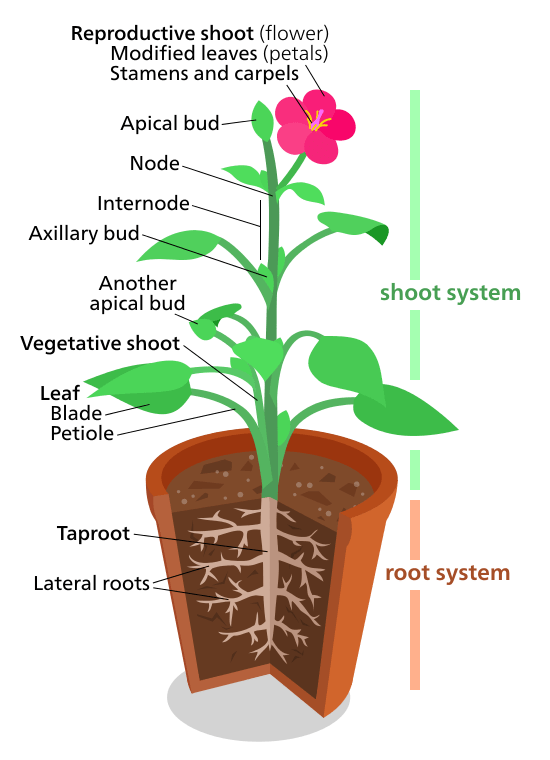
This module introduces you to plant diversity, taxonomy, anatomy, and physiology, highlighting the major groups of plants from non-flowering to flowering species and their evolutionary relationships. It examines the structural organization of plants and the physiological processes that govern growth, development, and reproduction. You will develop the knowledge and skills needed to understand plants as living systems and to teach plant biology effectively.
- Lecturer: Rukundo Desire
- Lecturer: Solange Nyiraguhirwa
1. Brief description of aims and content
This module aims at understanding the most common political systems around the world and the principles advocated acquiring and managing the political power.
- Lecturer: RUHUMULIZA GASPARD
- Lecturer: Ben KARENZI
Brief description of aims and content
This module aims at describing and understanding the important political, economic, social et cultural changes in the History of Rwanda from the Prehistory to the 19 th century.
- Lecturer: RUHUMULIZA GASPARD
- Lecturer: Ben KARENZI
Brief description of aims and content
The module aims at:
-Making students aware of basic notions of Management
-Making students aware of Historical evolution of management theory and practice
making students understanding management as a process: Planning, organizing, coordinating and controlling
-Making students understanding the various principles of each step of management as a process
-Understanding the importance of Motivating and rewarding employees
-Making students understanding the different roles of Manager.
-Making students understanding decision making and leadership skills
-Making students understanding Management in the global environment
- Lecturer: Rukundo Desire
- Lecturer: JACKSON KAGOBORA
This course provides an in-depth exploration of the field of professional accounting, covering its historical development, core principles, regulations, and ethical considerations. Students will gain a comprehensive understanding of both financial and management accounting, as well as specialized areas like cost accounting, lean accounting, and transfer pricing.
- Lecturer: MUNGANYINKA Desanges
- Lecturer: IBANDA Hassan
Brief description of aims and content
The module aims at:
-Making students aware of the Project management environments
-Making students aware of Historical evolution of Project management theory and practices
-Making students understanding advanced Taxation and Auditing as processes: Planning, organizing, coordinating and controlling
-Making students understanding the various principles of each step or Project management as processes
-Understanding the principles of Project management
-Making students understanding the different roles of framework.
-Making students understanding decision making and leadership skills
- Lecturer: Alain Amani Manzi
- Lecturer: NSABIMANA William