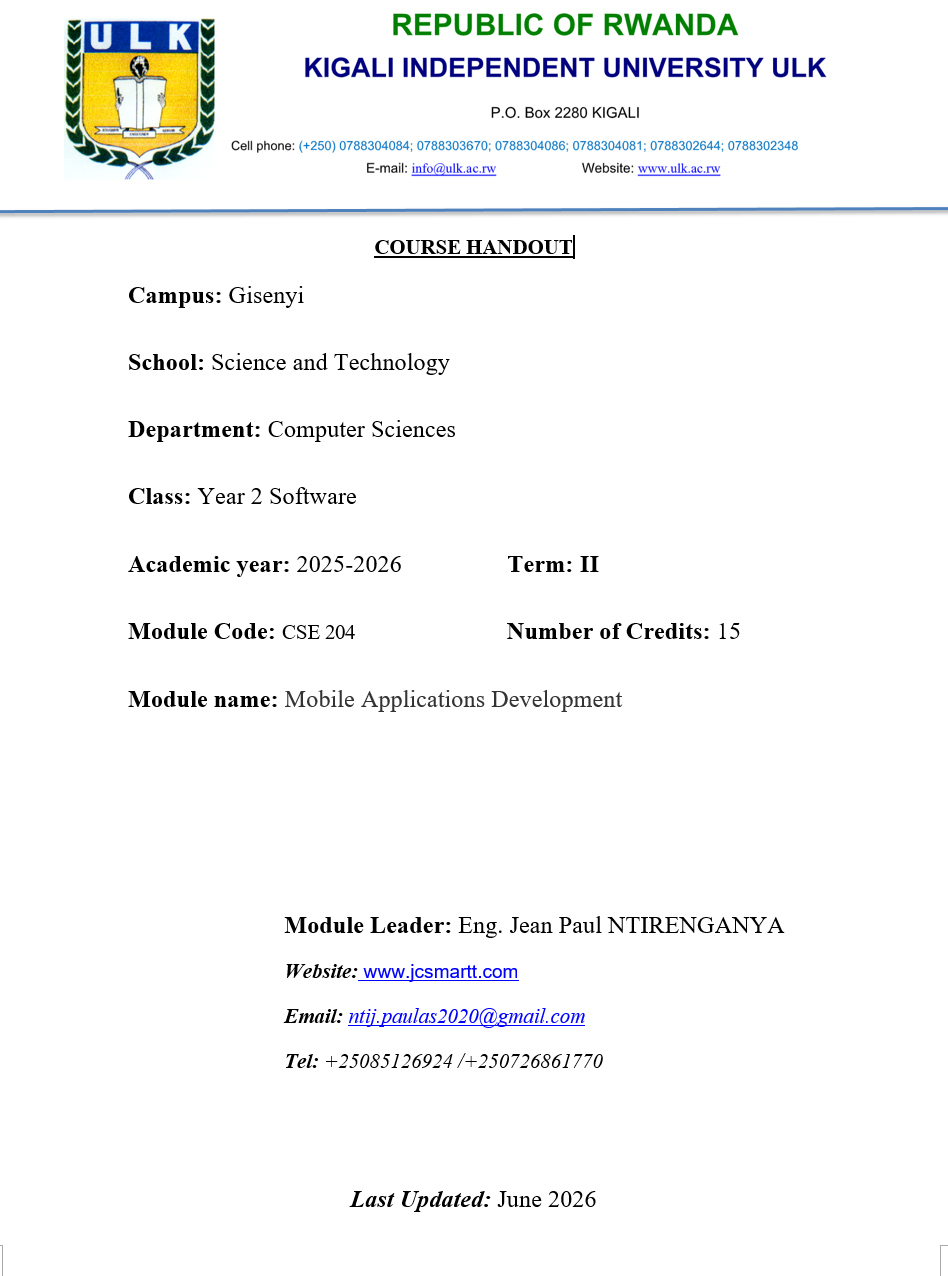
- Lecturer: Ntirenganya Jean Paul
- Lecturer: NZAYISENGA Marcelin
- Lecturer: Kwizera Jean Pierre
- Lecturer: NZAYISENGA Marcelin
- Lecturer: Kwizera Jean Pierre
- Lecturer: NZAYISENGA Marcelin
- Lecturer: ngabo gatera joseph
- Lecturer: NZAYISENGA Marcelin
By the end of this course, students should be able to:
-
Understand key legal frameworks
- Explain laws related to software such as intellectual property, copyright, patents, data protection, and cybercrime.
-
Apply ethical principles in IT practice
- Identify ethical dilemmas in software development and apply professional codes of ethics (e.g., ACM/IEEE) to resolve them.
-
Analyze data privacy and security issues
- Evaluate how software systems collect, store, and use data, and ensure compliance with privacy regulations.
-
Recognize intellectual property rights
- Differentiate between open-source, proprietary, and licensed software, and respect ownership rights.
-
Assess professional responsibility
- Understand accountability, liability, and the social impact of software systems on users and society.
-
Evaluate cybersecurity and cybercrime laws
- Identify legal implications of hacking, unauthorized access, and software misuse.
-
Promote ethical software development practices
- Integrate fairness, transparency, and inclusivity into system design (e.g., avoiding bias in algorithms).
-
Handle real-world case studies
- Critically analyze famous legal/ethical cases in IT and propose appropriate solutions.
-
Ensure compliance in software projects
- Apply legal and ethical standards during the software development lifecycle.
- Communicate ethical decisions effectively
- Justify decisions clearly to stakeholders, balancing technical, legal, and ethical considerations.
- Lecturer: Felix HARERIMANA
- Lecturer: NZAYISENGA Marcelin
- Lecturer: RUHUMULIZA GASPARD
- Lecturer: NZAYISENGA Marcelin
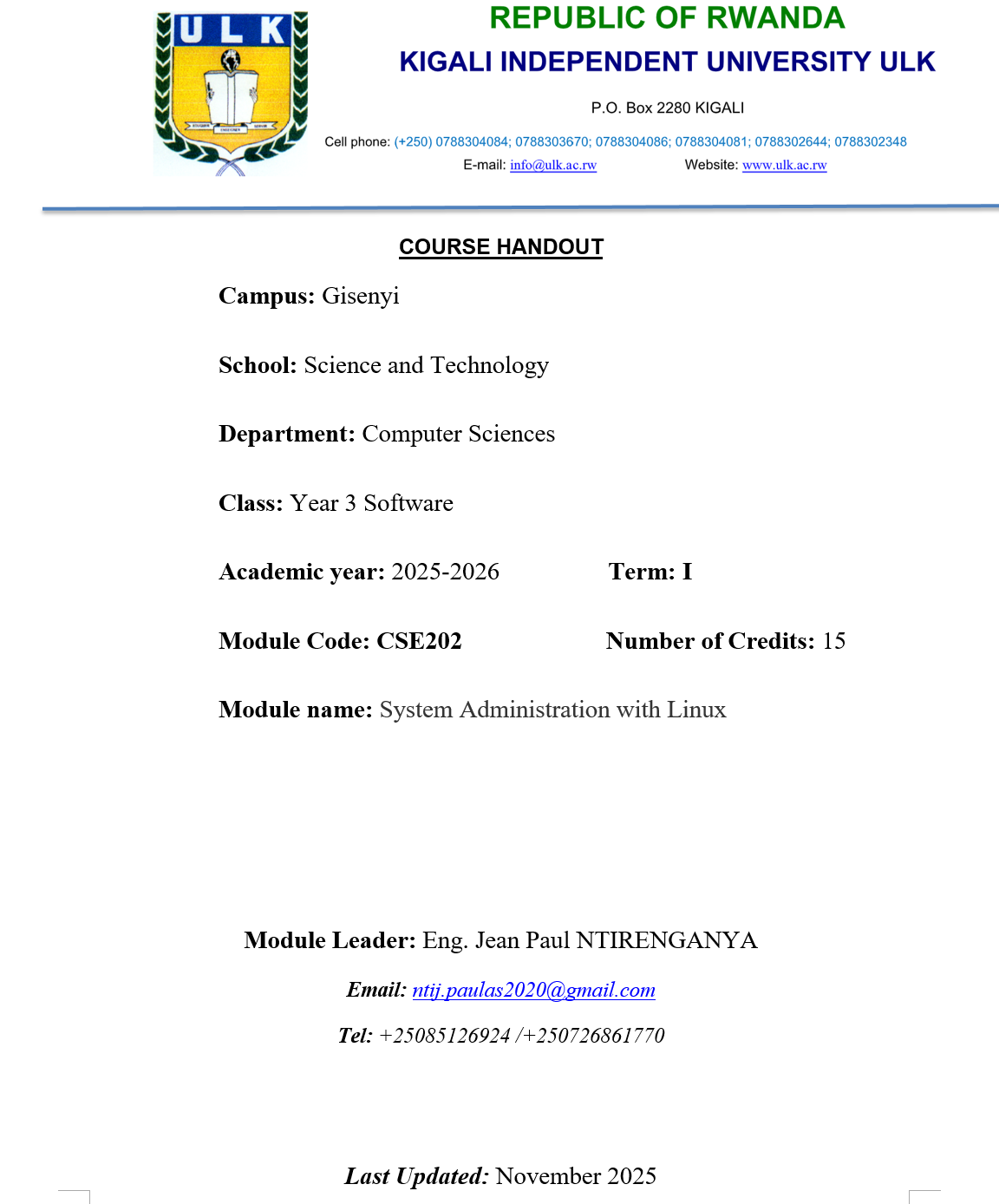
- Lecturer: Ntirenganya Jean Paul
- Lecturer: NZAYISENGA Marcelin
- Lecturer: Kwizera Jean Pierre
- Lecturer: NZAYISENGA Marcelin