Search results: 95
To demonstrate and to highlight how gender issues impede social and economic development of the country. In addition, to have a holistic view of the development with knowledge of social, cultural and economic development issues. Understand the importance of development endeavours.
Part I: Gender and Development
Chapter I: Gender terms and related Concepts
Chapter II: History of Women in Development
Chapter III: Theories of Gender Studies
Chapter IV: Women and Society
Gender Equity, Empowement Process
Part II: Development Theories
Chapter I. Key concepts definition
Chapter II. Genesis of development theory in the history of economics
Chapter III. Theorization of development
Chapter IV. Gender development theory
Chapter V. Rural development theory
- Lecturer: SEBUHURA KALALA
Brief description of aims and content
This module aims at describing and explaining the physical, demographic and economic features of Rwanda, and understanding ways of the country integration in regional and international organizations.
- Lecturer: RUHUMULIZA GASPARD
- Lecturer: KAMUKAMA JIMMY SPICE
DESCRIPTION OF OBJECTIVES OF THIS COURSE
• Understand the notions of HRM, functions, Environmental Influences on HRM, and Importance of HRM;
• To know the definition of HRP, aims of HRP, job analysis, the process of HRP;
• To acquire some notions of Recruitment, sources of recruitment, meaning and definition of selection, the difference between recruitment and selection, steps in selection procedure, the interview process, and lastly the types of induction programme.
• To distinguish the training and development with all their major components.
• Understand HR performance appraisal;
• Understand and know how to deal with job stress

- Lecturer: Ronald Kimuli
INTRODUCTION TO FLUID POWER.
Fluid power is the technology that
deals with the generation, control, and transmission of power, using
pressurized fluids.
For examples:
fluid power steers and brakes automobiles, launches spacecraft, moves earth,
harvests crops, mines coal, drives machine tools, controls airplanes, processes
food, and even drills teeth.
Fluid power is called hydraulics
when the fluid is a liquid and called pneumatic when the fluid is a
gas. Thus fluid power is the general
term used for both hydraulics and pneumatic. The first hydraulic fluid to be
used was water because it is readily available. However, water has many
deficiencies in comparison to hydraulic oils. For example water freezes more
readily, is not as good a lubricant, and tends to rust metal components. In
spite of these deficiencies, there is a renewed effort underway to return to
water in certain applications because of water’s abundance, non flammability,
and environmental cleanliness. When water hydraulics is used, the water
contains additives to improve lubricity and rust protection and prevent
freezing where necessary.
Hydraulic oils are currently much more widely
used than water, but as environmental concerns continue to become more serious,
water hydraulics is expected to become more prevalent.
Pneumatic systems use air as the gas medium because air is very abundant and can be readily exhausted into the atmosphere after completing its assigned task. There are actually two different types of fluid systems: fluid transport and fluid power.
- Lecturer: karikurubu emmanuel
Brief description of aims and content
The main aim of the module is to support students’ usage of the language as well as giving comprehensive information about the language; providing ample guidance and practice in sentence building, correct usage of varied vocabulary and structures and comprehension of written composition. This will equip the student with the ability to communicate effectively in English. The other target is availing students a chance to demonstrate evidence of their understanding of the content learnt and capability to proficiently use it rather than their ability to remember multitudes of information. This module also provides analytical knowledge and practical skills in relation to life by evaluating the student’s ability to effectively use the learned listening, speaking, reading and writing skills in varied environments.
- Lecturer: RUHUMULIZA GASPARD
Brief Description of aims and content
The History of French Literature module aims to provide students with a basic understanding of the evolutionary process of French literature, enabling them to analyse the texts of the major authors of each literary movement.
- Lecturer: RUHUMULIZA GASPARD


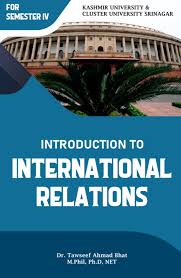
This is an
introductory course on international politics and the relations between actors
in the global political system. The purpose of this course is to systematically
study international interactions between actors with different interests and
ideas. In this course we will explore topics, encounter puzzles, examine
theories, and evaluate evidence to try to gain a greater understanding of world
politics. The overarching goal of the course is to understand how the
contemporary global political system originated, and what historical processes
and actors drove its development and change. The goal is for stimulated
thinking about events that take place outside of more than just our community
and how important it is to have an understanding of world events that occur and
how they might affect our lives.
- Lecturer: Ronald Kimuli
- Lecturer: Rutarindwa Jean Pierre
Brief description of aims and content
By the end of the level, the students will be able to focus on the problems of philosophical thought in general, African and Rwandan thought in particular; analyze the social, anthropological and deontological facts that contribute to their development; and provide the basic concepts of political economy leading to the understanding of economic, national and international environments.
- Lecturer: RUHUMULIZA GASPARD
- Lecturer: Crispine HAHIRWUWIZERA
The study of law begins with understanding its foundations—what law is, why it exists, and how it functions in society. This assignment is designed to introduce first-year students to the core principles, sources, and purposes of law. It explores the role of law in maintaining order, resolving disputes, protecting rights, and promoting justice. Through this task, students will familiarize themselves with key legal concepts such as the rule of law, legal systems, classifications of law, and the relationship between law and morality. The assignment aims to build a strong foundation for more advanced legal studies and to develop analytical thinking, interpretation, and legal writing skills from the outset of the legal education journey.
- Lecturer: Uwera Mamy
The module "Introduction to Law" provides a foundational understanding of the nature, purpose, and structure of law within society. It introduces students to basic legal concepts, classifications of law (such as public and private law), sources of law, and the role of legal institutions in maintaining order and justice. This course also explores fundamental legal principles such as the rule of law, justice, legal personality, and the distinction between moral and legal rules. Through this module, students will gain essential knowledge and analytical skills that prepare them for advanced legal studies and help them appreciate the importance of law in regulating human behavior and resolving social conflicts. It serves as the cornerstone for all future legal learning and professional development.
- Lecturer: Uwera Mamy
Introduction to major
genres of literature such as oral literature, drama, poetry and prose fiction
from various times and cultures
of the world. Course texts will be selected from works across section of authors
using the educational approach. The module shall be introductory in nature; it
shall try to define the different
genres of literature, draw a distinction between oral and written literature,
then identify educational values to
facilitate the use of sample texts to closely study each of these genres with a
view to understanding areas,
like themes, characterization, plot, style and language use, among other things
- Lecturer: RUHUMULIZA GASPARD
- Lecturer: Jacques Ndahayo
Brief description of aims and content
Introduction to major genres of literature such as oral literature, drama, poetry and prose fiction from various times and cultures of the world. Course texts will be selected from works across section of authors using the educational approach. The module shall be introductory in nature; it shall try to define the different genres of literature, draw a distinction between oral and written literature, then identify educational values to facilitate the use of sample texts to closely study each of these genres with a view to understanding areas, like themes, characterization, plot, style and language use, among other things.
- Lecturer: RUHUMULIZA GASPARD
- Lecturer: Jacques Ndahayo
Political science was the first among social sciences to retain the attention of philosophies. Rating from the antiquity, outstanding philosophies take interest into “government” of societies. Plato (428-347 before Jesus Christ) and his book “ the republic” the perfect city founded on justice, Aristotle ( 384-322 before Christ) and his book “politics” which presents a typology of government, have been among the first writers of treaties on political science.
- Lecturer: SEBUHURA KALALA
The course is designed for students who begginners in the field of social sciences. The aim of the module is to set out the main principles and elementary concepts of sociology, develop students’ skills of sociological thinking and prepare students for deeper studies of particular sociological disciplines and areas of knowledge. Students will independently study theoretical materials using the list of recommended readings. As a result of the module, students will learn the main principles and concepts of general sociology, as well as some important theoretical approaches to the study of society and its subsystems; learn to analyze events and facts from the sociological viewpoint; get an idea of some key sociological categories and directions of sociological knowledge.
At the end of this module, students should have also acquired enough skills in defining the basic concepts of General Psychology; Giving the current orientations of General Psychology; Raising the relationship between Psychology and other sciences, Identifying and explaining the principal methods of General Psychology and Knowing the major specializations found in Psychology; Understanding how the brain is involved in controlling behavior and mental processes, describe the impact, in the behavior of environmental factors relating to our society to identify various means the individual disposes to influence his environment.
- Lecturer: SEBUHURA KALALA
At the end of this module students will be able:
1) To be able to translate the expressions and juridical tems in Kinyarwanda and English or vice versa;
2) To be able to understand the custom Rwandan law;
3) To be able to distinguish the different parties of the judgment;
4) To be able to translate and comment a judgment in Kinyarwanda.
- Lecturer: Uwera Mamy
Having successfully completed the module, students should be able:
1. To be able to translate the expressions and juridical tems in Kinyarwanda and English or vice versa;
2. To be able to understand the custom Rwandan law;
3. To be able to distinguish the different parties of the judgment;
4. To be able to translate and comment a judgment in Kinyarwanda.
- Lecturer: Uwera Mamy
To help students understand the multilingual conditions of language learning, this module defines multilingualism from different perspectives (number of languages in the world, status of different languages, etc.); presents the patterns of multilingualism in different nations and explains their settings; and describes the multilingual practices obtaining in different contexts. It further presents a historical overview of traditional and contemporary perspectives on L1 and L2 acquisition/learning and draws on perspectives on multilingualism to explain the current paradigm shift from monolingual to multilingual views on language acquisition/learning, and the effects of multilingualism on language learning.
- Lecturer: RUHUMULIZA GASPARD
- Lecturer: Mugisho Ndabuli
- Lecturer: Mugisho Ndabuli