Search results: 95
This module of advanced international humanitarian law is aimed at imparting extended knowledge and understanding of the rules and concepts relevant to the international legal regulation of conduct and activities during international or internal armed conflict.
- Lecturer: Alfred Mwenedata
- Lecturer: Dan Ngirababo
This module provides a good understanding of linear algebra concepts / matrix computations by hand, practical algebraic concepts and methods that are useful in data analysis applications, links between vector space representations and matrices, and between decompositions such as eigenvalue decomposition, singular value decomposition, linear systems, least squares solutions. To provide a working understanding of matrices and vector spaces for later modules to build on and to teach students practical techniques and algorithms for fundamental matrix operations and solving linear equations.
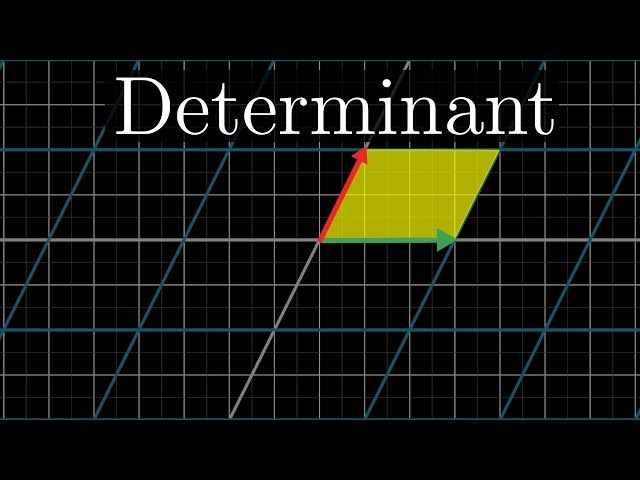
They must also understand the equivalence of linear maps between vector spaces and matrices and be able to row reduce a matrix, compute its rank and solve systems of linear equations. The definition of a determinant in all dimensions will be given in detail, together with applications and techniques for calculating determinants. Students must know the definition of the eigenvalues and eigenvectors of a linear map or matrix, and know how to calculate them.
- Lecturer: NZAYISENGA Marcelin
- Lecturer: Gratien TWAHANYIMPETA
This module provides a good understanding of linear algebra concepts / matrix computations by hand, practical algebraic concepts and methods that are useful in data analysis applications, links between vector space representations and matrices, and between decompositions such as eigenvalue decomposition, singular value decomposition, linear systems, least squares solutions. To provide a working understanding of matrices and vector spaces for later modules to build on and to teach students practical techniques and algorithms for fundamental matrix operations and solving linear equations.
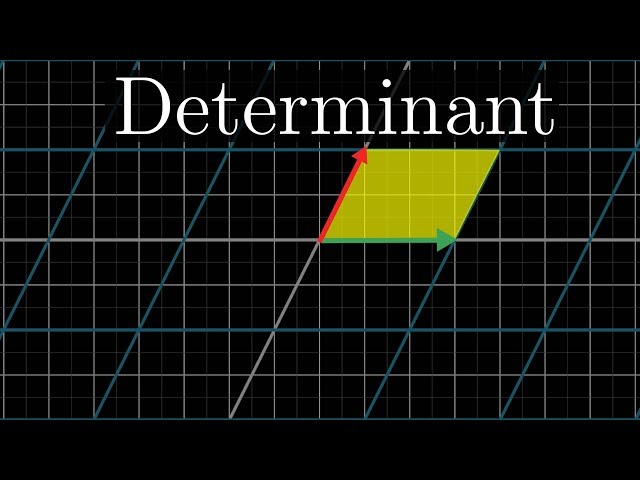
They must also understand the equivalence of linear maps between vector spaces and matrices and be able to row reduce a matrix, compute its rank and solve systems of linear equations. The definition of a determinant in all dimensions will be given in detail, together with applications and techniques for calculating determinants. Students must know the definition of the eigenvalues and eigenvectors of a linear map or matrix, and know how to calculate them.
- Lecturer: NZAYISENGA Marcelin
- Lecturer: Gratien TWAHANYIMPETA
The Year 3 Accounting workshop at ULK aims to deepen students' understanding of advanced accounting principles and practices. Topics covered may include financial statement analysis, advanced managerial accounting techniques, cost accounting techniques, auditing, and international accounting standards. Through practical exercises, case studies, and discussions, students will develop critical thinking skills and practical knowledge are essential for accounting professionals. The workshop likely emphasizes hands-on application and real-world scenarios to prepare students for careers in accounting and finance.
- Lecturer: MUNGANYINKA Desanges
- Lecturer: HAGUMIMANA FRANK
The Advanced Computer Basics Module focuses on building deeper knowledge and practical skills beyond fundamental computer use. It typically covers:
Operating Systems: Understanding advanced features of systems like Windows or Linux, including file management, system settings, and troubleshooting.
Productivity Tools: Efficient use of applications such as Microsoft Excel and Microsoft PowerPoint for data analysis and presentations.
Internet & Networking: Concepts like web browsing, email management, cloud services, and basic networking principles.
Cybersecurity Basics: Protecting devices and data, recognizing threats, and safe online practices.
Hardware & Maintenance: Understanding computer components and performing basic troubleshooting and maintenance.
In short: it helps learners become confident, efficient, and secure in using computers for academic, professional, or personal tasks.

ADVANCED FINANCIAL ANALYSIS & INTERPRETATION is a highly competitive sector of modern business. It operates in a very complex and dynamic environment with changes occurring rapidly in client requirements, technology, competition and regulation. Financial managers, traders, analysts and those wishing to pursue a career in this field have to make rapid and sometimes far reaching decisions.
Aims:
• To provide students with the knowledge, understanding and skills required to operate effectively in Advanced financial analysis and interpretation.
• To allow students to make Advanced financial analysis and interpretation decisions in a fast moving environment.
• To provide a source of highly skilled graduates to the financial services industry.
• To prepare students for high level positions in industry, commerce and banking.
- Lecturer: BIKORIMANA Gaspard
- Lecturer: NSABIMANA William
ADVANCED FINANCIAL ANALYSIS & INTERPRETATION is a highly competitive sector of modern business. It operates in a very complex and dynamic environment with changes occurring rapidly in client requirements, technology, competition and regulation. Financial managers, traders, analysts and those wishing to pursue a career in this field have to make rapid and sometimes far reaching decisions.
Aims:
• To provide students with the knowledge, understanding and skills required to operate effectively in Advanced financial analysis and interpretation.
• To allow students to make Advanced financial analysis and interpretation decisions in a fast moving environment.
• To provide a source of highly skilled graduates to the financial services industry.
• To prepare students for high level positions in industry, commerce and banking.
- Lecturer: BIKORIMANA Gaspard
- Lecturer: NSABIMANA William
Dear students ,
You are most welcome to the module of Advanced Financial Analysis and Interpretations
Advanced financial analysis involves examining complex financial data and using sophisticated techniques to derive insights and make informed decisions. Here's a summary of key aspects:
- Financial Statement Analysis:
- Analyzing financial statements (income statement, balance sheet, and cash flow statement) to assess a company's performance, profitability, liquidity, and solvency.
- Utilizing ratio analysis (liquidity ratios, profitability ratios, efficiency ratios, leverage ratios) to evaluate various aspects of a company's financial health.
- Forecasting and Projections:
- Employing quantitative techniques such as regression analysis, time series analysis, and scenario analysis to forecast future financial performance.
- Building financial models, including discounted cash flow (DCF) models and comparable company analysis (CCA), to estimate company valuation.
- Risk Analysis and Management:
- Evaluating risks associated with investments or projects using techniques like sensitivity analysis, Monte Carlo simulation, and stress testing.
- Implementing risk management strategies to mitigate financial risks, including market risk, credit risk, operational risk, and liquidity risk.
- Capital Budgeting and Investment Decisions:
- Assessing investment opportunities through capital budgeting techniques such as net present value (NPV), internal rate of return (IRR), payback period, and profitability index.
- Comparing investment alternatives and selecting projects that maximize shareholder value.
- Financial Reporting and Compliance:
- Ensuring compliance with accounting standards (e.g., GAAP, IFRS) and regulatory requirements.
- Analyzing financial disclosures and footnotes to understand the impact on financial statements and investment decisions.
- Corporate Finance:
- Managing capital structure decisions, including debt vs. equity financing, dividend policy, and share buybacks.
- Analyzing mergers and acquisitions (M&A) opportunities, including due diligence, valuation, and post-merger integration.
- Behavioral Finance:
- Incorporating psychological biases and investor behavior into financial analysis and decision-making.
- Understanding how cognitive biases such as overconfidence, loss aversion, and herding affect market prices and investment outcomes.
- Sustainability and ESG Analysis:
- Assessing environmental, social, and governance (ESG) factors' impact on financial performance and risk.
- Integrating sustainability considerations into investment decisions and corporate strategy.
Advanced financial analysis requires a deep understanding of financial theory, quantitative methods, and real-world applications to generate meaningful insights and recommendations for investors, managers, and other stakeholders.
- Lecturer: Hagumimana Frank
- Lecturer: HAGUMIMANA FRANK
The Analog and Digital Electronics course teaches how electronic systems process signals whether they’re continuous (analog) or discrete (digital). You learn how real-world signals (like sound, light, temperature) are captured, processed, and converted into digital information that computers can understand.
Skills You Gain
-
Circuit design and analysis
-
Understanding of signal behavior
-
Ability to read and create circuit diagrams
-
Problem-solving in electronics systems
-
Foundation for advanced fields like embedded systems, robotics, and communication engineering
- Lecturer: Rutarindwa Jean Pierre
- Lecturer: Rwego Mucyo Placide
Brief description of aims and content
The module aims at:
Making students aware of the Auditing and Assurance environments
Making students aware of Historical evolution of Auditing and Assurance theory and practices
Making students understanding the various principles of each step of Auditing and Assurance as processes
Understanding the principles of Auditing and Assurance
Making students understanding the different roles of framework.
Making students understanding decision making and leadership skills
- Lecturer: Patrick GASASIRA
- Lecturer: NSABIMANA William
- Lecturer: karikurubu emmanuel
The main aim of the module is to support students’ usage of the language as well as giving comprehensive information about the language; providing ample guidance and practice in sentence building, correct usage of varied vocabulary and structures and comprehension of written composition. This will equip the student with the ability to communicate effectively in English. The other target is availing students a chance to demonstrate evidence of their understanding of the content learnt and capability to proficiently use it rather than their ability to remember multitudes of information. This module also provides analytical
knowledge and practical skills in relation to life by evaluating the student’s ability to effectively use the learned listening, speaking, reading and writing skills in varied environments.
- Lecturer: RUHUMULIZA GASPARD
1 Brief description of aims and content
The module aims at:
Making students aware of the Corporate, Business law and Taxation environments
Making students aware of Historical evolution of Corporate, Business law and Taxation theory and practices
Making students understanding Corporate, Business law and Taxation as processes
Making students understanding the various principles of each step of Corporate, Business law and Taxation as processes
Understanding the principles of Corporate, Business law and Taxation
Making students understanding the different roles of framework.
Making students understanding decision making and leadership
- Lecturer: Emmanuel MUNYAZIBONEYE
- Lecturer: NSABIMANA William
Brief description of aims and content
The module aims at:
Making students aware of the Operations and Research Methodology environments
Making students aware of Historical evolution of Operations and Research Methodology theory and practices
Making students understanding the various principles of each step of Operations and Research Methodology as processes
Understanding the principles of Operations and Research Methodology
Making students understanding the different roles of framework.
Making students understanding decision making and leadership skills
- Lecturer: NSABIMANA William
The module aims at:
Making students aware of the Operations and Research Methodology environments
Making students aware of Historical evolution of Operations and Research Methodology theory and practices
Making students understanding the various principles of each step of Operations and Research Methodology as processes
Understanding the principles of Operations and Research Methodology
Making students understanding the different roles of framework.
Making students understanding decision making and leadership skills
- Lecturer: NSABIMANA William
Brief description of aims and content
This module aims at describing and understanding the important political, economic, social et cultural changes of colonial and post-colonial history of Rwanda. It also describes the causes and consequences of the genocide against the Tutsi as well as it helps the students to understand the present in order to build a better future.
- Lecturer: RUHUMULIZA GASPARD
- Lecturer: MUNEZA Patrick
Common and economic crimes represent two major categories of criminal offenses that significantly impact society. Common crimes typically involve acts of physical harm or threat to individuals or property, such as theft, assault, robbery, murder, and rape. They are often motivated by personal gain, violence, or revenge. On the other hand, economic crimes refer to non-violent, financially motivated offenses such as fraud, embezzlement, corruption, tax evasion, money laundering, and insider trading. These crimes often involve abuse of trust or authority and can undermine public institutions and economic stability. Understanding both types of crimes is essential for developing effective prevention strategies, strengthening justice systems, and promoting accountability and rule of law in society.
- Lecturer: Uwera Mamy
The Comparative law is useful for the comprehension of foreign peoples and it gives a better regime to international relations. This interest does firstly affect the International Public Law. In fact, the conditions of the modern world do impose a total renewal of this branch of law. It must settle among states, the relations of cooperation at all levels. It is clear that these relations may not settle or develop as required due to the ignorance of international law. The UNESCO constitutive act recognizes the knowledge and the mutual comprehension of nations by the development at the universal level of the study of the foreigners law through comparative method. For this reason, diplomats and treaties negotiators must be prepared to understand the legal systems of the concerned parties in order to know in which way and for which arguments they may hope to convince their interlocutors.
- Lecturer: Abayo Divine
- Lecturer: Uwera Mamy
The Comparative law is useful for the comprehension of foreign peoples and it gives a better regime to international relations. This interest does firstly affect the International Public Law. In fact, the conditions of the modern world do impose a total renewal of this branch of law. It must settle among states, the relations of cooperation at all levels. It is clear that these relations may not settle or develop as required due to the ignorance of international law. The UNESCO constitutive act recognizes the knowledge and the mutual comprehension of nations by the development at the universal level of the study of the foreigners law through comparative method. For this reason, diplomats and treaties negotiators must be prepared to understand the legal systems of the concerned parties in order to know in which way and for which arguments they may hope to convince their interlocutors.
In addition, one of the sources of the International Public Law foreseen by the International Justice Court is the general principles of the law common to the civilised nations. The interpretation of this formula can only be done based on Comparative Law.
Similarly, the Comparative Law has a great role to play in the development of the International Private Law. Indeed, it is required to assure the uniformity of the national solutions of different countries in what concerns private relations in order to avoid the unpredictability and the danger of contraction etc
- Lecturer: Abayo Divine
- Lecturer: Uwera Mamy
This course seeks to provide a solid understanding about the general overview on world main systems of law and students should be familiar with terminology and way of reasoning particular to each of them.
It covers:
The structure of sources of law in foreign legal systems: Romano Germanic system (historical background of the formation of the system, structure of laws, sources of laws); common law countries (English law, law of United State of America); Islamic law, law of Far East;
- Lecturer: Abayo Divine
- Lecturer: Uwera Mamy