Search results: 95
Brief description of aims and content
The module aims at:
-Making students aware of the Project management environments
-Making students aware of Historical evolution of Project management theory and practices
-Making students understanding advanced Taxation and Auditing as processes: Planning, organizing, coordinating and controlling
-Making students understanding the various principles of each step or Project management as processes
-Understanding the principles of Project management
-Making students understanding the different roles of framework.
-Making students understanding decision making and leadership skills
- Lecturer: Alain Amani Manzi
- Lecturer: NSABIMANA William
The concept administration is viewed as “practical exercise” that needs no special study. On the other hand, others regard is as a “specialized field” with sound theories, principles and techniques. With this in mind, it is important for all of us in this study, to try to define it so that we improve our understanding of this concept. Thus our interest here is to find out what it means its scope, nature and application in public sector.
- Lecturer: SEBUHURA KALALA
This course provides an introduction to the main concepts and principles of public international (PIL) with specific emphasis on their practical impact on the conduct of international affairs. It is structured into three parts. The first part focuses on the foundations of PIL (subjects, sources, principles and relations between international and domestic law). The second part deals with three major areas of PIL, namely the law of treaties, the law of State responsibility and the peaceful settlement of international disputes. The third part will be devoted to some specialized areas of PIL, such as international environmental law, human rights law, and the law governing economic development. The course is primarily intended for students enrolled in the LLB and IR (international relations) programmes, but it is also open to other students specializing in disciplines other than international law.
- Lecturer: Uwera Mamy
The module aims at:
-Making students aware of the Quality and risk management environments
-Making students aware of Historical evolution of Quality and risk management theory and practices
-Making students understanding Quality and risk management as processes: Planning, organizing, coordinating and controlling
-Making students understanding the various principles of each step or Quality and risk management as processes
-understanding the principles of Quality and risk management
-Making students understanding the different roles of framework.
-Making students understanding decision making and leadership skills
- Lecturer: Dr. Bruce Gashema,Ph.D
- Lecturer: NSABIMANA William
I) Knowledge and Understanding
- Understand the meaning of quality management
- Identify the various approach that were adopted by organization that have implemented quality management
- Identify the reasons for the success or failure of some organization in the implementation of quality management
- Identify key leaders in the field of quality management and their contribution
- Describe tools for identifying and solving quality problem.
- Lecturer: Uwimbabazi Innocente
- Lecturer: NSABIMANA William
This module covers the R statistical programming language; the RStudio Integrated Development Environment (IDE); Data importation methods; Basic R Data Types; Data processing and manipulation techniques; External add-in packages for R; Summary statistic functions; Data visualisations using ggplot and Error types. More specifically, the module provides introduction to R, RStudio, RstudioCloud and why using scripting; R for calculations, variables and objects, assignments, vectors, built -in functions; vector calculations, reading in data, built-in functions; data types in R, understanding and manipulating data structures; visualization: making plots; indexing; working with strings, working with dates and times; conditional statements and loops; data exploration: descriptive statistics; and data science principles.

- Lecturer: Rutarindwa Jean Pierre
- Lecturer: Leopord UWAMAHORO
This course's objective is to familiarize students with the power, precision, and versatility of modern radar systems, with special emphasis on detection principles, signal processing, and navigational applications. It highlights how radar systems perform critical surveillance, tracking, and guidance tasks with remarkable accuracy and reliability across military, aviation, and maritime domains.
By the end of this course, students will acquire a solid understanding of radar system design, operation, and applications from air traffic control to weather monitoring. Students will be able to analyze, optimize, and troubleshoot radar systems for real-world scenarios, preparing them for advanced Diploma in Electronics and Telecommunication Engineering.
- Lecturer: NSHIMIYIMANA Thacien
MODULE: NETWORKING: routing and switching
General objective:
• The module aims to provide students with a comprehensive understanding of computer networking principles, network addressing, network operating systems, IP routing, and dynamic routing protocols, preparing them for practical applications in designing, implementing, and managing computer networks.
Specific objectives:
Understand the fundamentals
of computer networking, including network components, protocols, and
architecture.
- Explore the evolution of networking technologies and their impact on
communication and information exchange.
- Identify key networking concepts, such as the OSI model, TCP/IP stack, and
network topologies.
- Learn the principles of network addressing, including IPv4 and IPv6
addressing schemes.
- Understand the allocation and management of IP addresses within a network.
- Explore subnetting, addressing classes, and address resolution protocols.
- Gain knowledge of network operating systems and their role in managing
network resources and services.
- Explore the features and functionalities of popular NOS platforms, such as
Windows Server, Linux, and macOS Server.
- Learn about user authentication, directory services, file sharing, and
network security in NOS environments.
- Understand the principles of IP routing and the routing process in computer
networks.
- Explore routing protocols, such as static routing, dynamic routing, and
default routing.
- Learn about routing tables, routing metrics, and the role of routers in
directing data packets.
- Compare and contrast dynamic routing protocols, including RIP (Routing
Information Protocol), EIGRP (Enhanced Interior Gateway Routing Protocol), and
OSPF (Open Shortest Path First).
- Understand the operation, advantages, and limitations of each routing
protocol.
- Configure and troubleshoot dynamic routing protocols in network environments.
- Lecturer: NZEMERIMANA Jean Pierre
- Lecturer: Rutarindwa Jean Pierre
PORTFOLIO MGT & SECURITY ANALYSIS is a highly competitive sector of modern business. It operates in a very complex and dynamic environment with changes occurring rapidly in client requirements, technology, competition and regulation. Financial managers, traders, analysts and those wishing to pursue a career in this field have to make rapid and sometimes far reaching decisions. Therefore a unique opportunity to study advanced theory and practice relating to Portfolio management & Security analysis, and to develop the skills and practices necessary to survive in this complex environment must be considered an essential asset.
Aims:
• To provide students with the knowledge, understanding and skills required to operate effectively in Portfolio management & Security analysis.
• To allow students to make Portfolio management & Security analysis decisions in a fast moving environment.
• To provide a source of highly skilled graduates to the financial services industry.
• To prepare students for high level positions in industry, commerce and banking.
- Lecturer: obiora Emeka
- Lecturer: NSABIMANA William
Having successfully completed the module, students should be able to demonstrate knowledge and understanding of:
- Explain the role of Portfolio management & Security analysis in a modern international business.
- Describe the Portfolio management & Security analysis environment and appreciate its role in corporate Portfolio management & Security analysis decision making.
- Understand the operation and application of Portfolio management & Security analysis.
- Provide students with an understanding of Portfolio management & Security analysis decisions in the environment.
- Lecturer: obiora Emeka
- Lecturer: NSABIMANA William
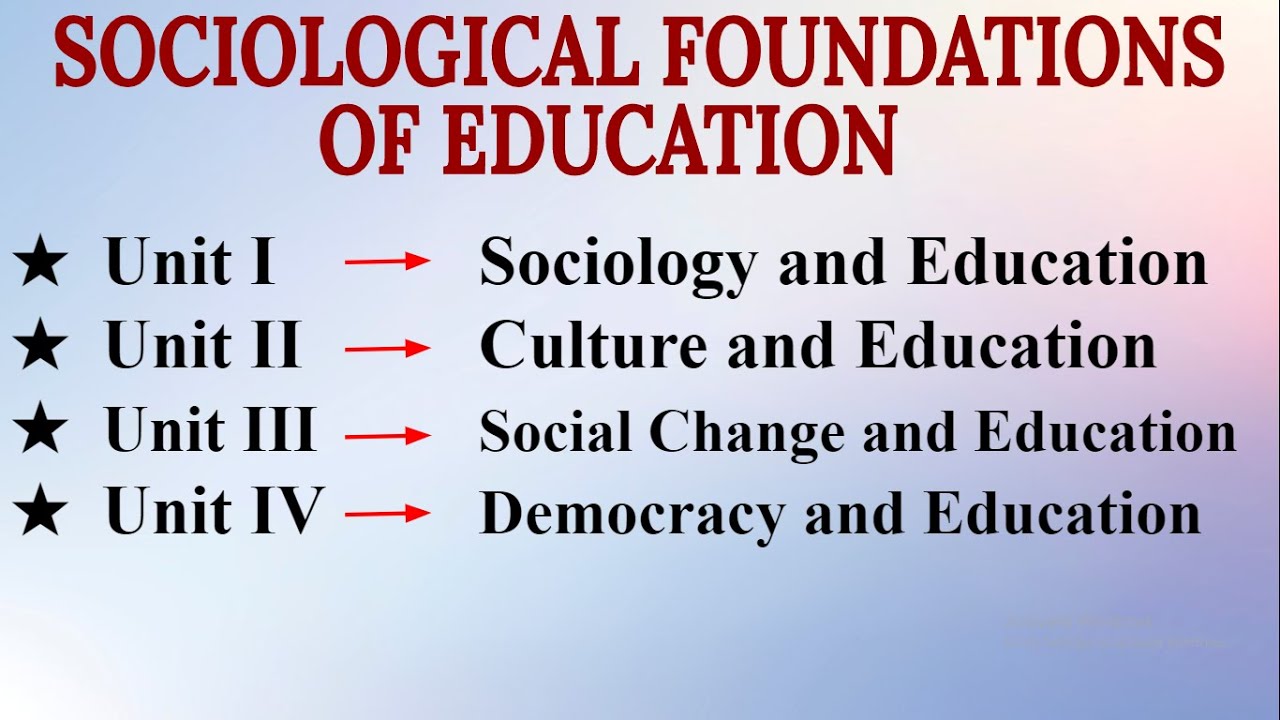
The first importance is to develop and to analyse the social phenomena that occur in a particular branch of sociology that is the sociology of the education. It will consist in understanding the link between the society and the education i.e. how the education exercises an influence on the society and how each society determines its system of education.
It is necessary to note that the education is not a domain isolated from the social life but is in interaction with other domains. We cannot understand the phenomenon of the education without putting it on in a whole of the systems close to the social life.
It is also an introduction to the personal research, and this must push to the consultation of the documents concerning the same object.
Another importance is of interest limited to people that, by taste or interest, will make some research on the education. They must possess particular sociological analysis of the education so that after this course, they should be able to analyse the main facts related to the education system or to establish the professional reports in relation to different aspects of the same phenomenon connected to the education.
- Lecturer: Ronald Kimuli
This unit presents the Fundamentals of Sociology of Education, focusing on the meaning of sociology, its functions, meaning of education and the relationship between education and sociology and education and society. The acquisition of these basic rubrics will expose you to the nature of the course.
The module consists in understanding the link between the society and education i.e. how the education exercises an influence on the society and how each society determines its system of education.
This module introduces students to look at major theories of human communication, designed to give students a critical understanding of key themes in the field of communication. The art of communication is the language of development. It forms the foundation of this course. Here students explore the role of communication with development stakeholders including the community and how Medias influence publics.
- Lecturer: SEBUHURA KALALA
By the end of this course, students will be able to:
· Introduce software security as a discipline and distinguish it from related fields.
· Describe the components and lifecycle of a risk management framework.
· Explain the processes of vulnerability assessment and management.
· Apply foundational risk management concepts to a given software project.
· Perform basic code
inspection to identify common security vulnerabilities. · Explain the purpose
and process of architectural risk analysis. · Differentiate between
penetration testing methodologies. · Describe the
principles and applications of fuzz testing (fuzzing). · Explain the concepts
of symbolic and concolic execution for path exploration. · Describe how model
checking can formally verify system properties. · Understand the
principle of abstract interpretation for static analysis. · Relate these advanced
techniques to automated test generation. · Explain the concept of risk-based
security testing. · Describe how software security
intersects with security operations (SecOps). · Utilize the MITRE ATT&CK™
framework to understand adversary behavior. · Outline the key pillars of an
enterprise software security program.
- Lecturer: Ntirenganya Jean Paul
- Lecturer: NZAYISENGA Marcelin
Hello learners,
Welcome to the EDM 103 Module - Theories and Practices of Teaching.
My name is Dr David Ngatia and I will be your course lecturer.
This course aims to equip you with a comprehensive understanding of teaching theories and practices by providing you with the knowledge, skills and values necessary to create engaging, effective, and inclusive learning environments.
Hope you will enjoy the course!
Email Contact: dgachiu@gmail.com Moblie-WhatsApp: +254 725620042

- Lecturer: Rukundo Desire
- Lecturer: David Ngatia
Brief description of aims and content
This module is designed to provide students with an understanding of
Working Capital Management and Business statistics. It thus provides a framework for analysing how the three different working capital components correlate, short term sources of funds and means of funds placement are examined. Components of inferential statistics applied to business and finances are the object of the second unit: business statistics.
- Lecturer: BIKORIMANA Gaspard
- Lecturer: NSABIMANA William